
Industrial Sewage Pump for STP, ETP & Wastewater Treatment Applications
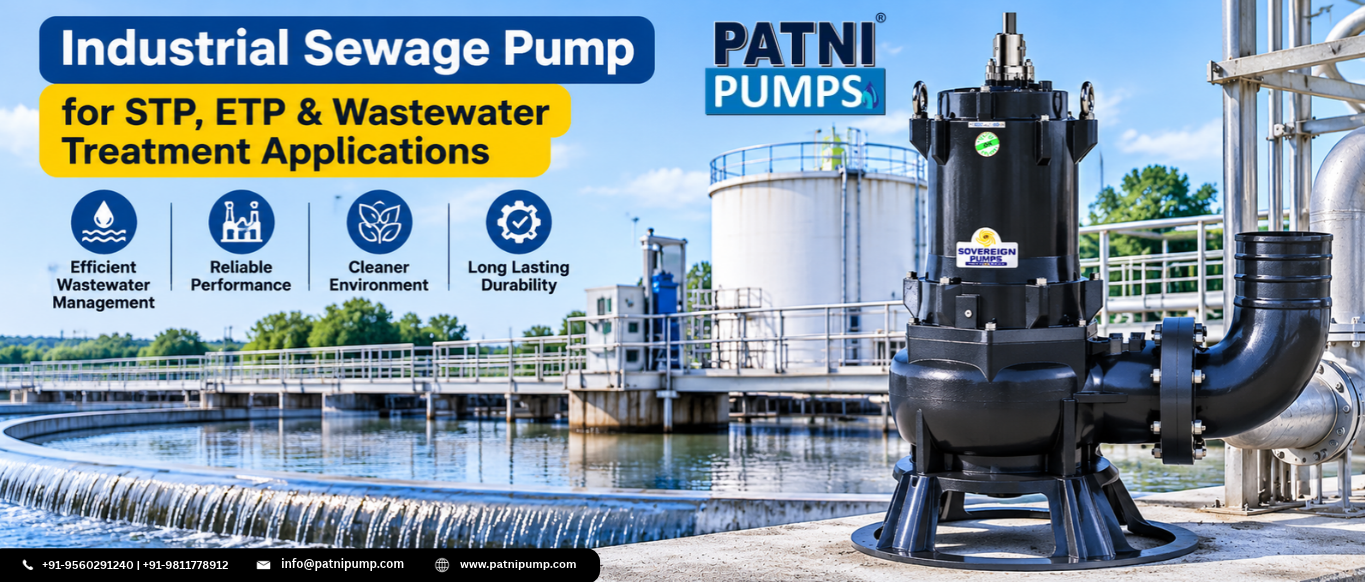
Wastewater management is an essential part of industrial operations, municipal infrastructure, commercial facilities and residential developments. From sewage treatment plants to effluent treatment systems, wastewater must be collected, transferred and managed efficiently to support smooth operations and environmental compliance.
An industrial sewage pump plays an important role in these applications by moving wastewater containing suspended solids, organic matter and other contaminants through treatment and drainage systems. Selecting the appropriate sewage pump is important for maintaining flow, reducing operational interruptions and supporting reliable wastewater handling.
This blog explains how sewage pumps are used in STP, ETP and wastewater treatment applications, their major types, selection considerations and the factors that influence pump performance.
Industrial Sewage Pump: Understanding Its Role in Wastewater Treatment
An industrial sewage pump is designed to transfer wastewater containing suspended solids, sewage, effluent and other liquid waste materials. Unlike standard water pumps, sewage pumps are engineered for applications where the liquid may contain contaminants or solid particles that can affect conventional pumping equipment.
Submersible sewage pumps are commonly installed in collection pits, pumping stations, sumps and treatment plant systems. Their role is to move wastewater from one location to another so that it can undergo treatment, further processing or controlled discharge.
The correct sewage pump depends on the nature of the wastewater, the required flow rate, pumping head, solids content and operating conditions.
Sewage Pump Applications in STP Plants
A Sewage Treatment Plant (STP) processes wastewater generated from residential buildings, commercial establishments, institutions, industries and municipal systems. Pumps are required at different stages to transport sewage through the treatment process.
1. Sewage Collection and Transfer
Sewage pumps transfer wastewater from collection pits, underground sumps and pumping stations to treatment units. They are particularly useful when wastewater needs to be moved against gravity or from lower elevations to higher levels.
2. Raw Sewage Pumping
Raw sewage may contain organic waste, suspended solids and other contaminants. A suitable sewage pump is selected to handle the liquid characteristics and solids content without frequent blockages.
3. Treatment Process Transfer
Pumps may be used to transfer wastewater between different treatment stages, depending on the plant layout and process requirements.
4. Drainage and Sump Emptying
Submersible sewage pumps can be installed in sumps and drainage pits to remove accumulated wastewater and support the operation of treatment facilities.
Sewage Pump Applications in ETP Plants
Effluent Treatment Plants (ETPs) are used to treat wastewater generated by manufacturing and industrial processes before reuse or discharge according to applicable requirements.
Industrial effluent characteristics can vary significantly from one industry to another. Wastewater may contain suspended solids, process residues, organic materials, chemicals or other substances. Pump selection must therefore be based on the specific fluid properties and operating conditions.
1. Industrial Effluent Transfer
Sewage and wastewater pumps can be used for moving industrial wastewater from collection tanks to treatment units and between different stages of an ETP.
2. Wastewater Collection Systems
Industrial facilities may generate wastewater in different production areas. Pumps help collect and transfer these liquids to designated treatment facilities.
3. Process Wastewater Handling
Certain sewage and wastewater pump configurations may be suitable for transferring process wastewater, depending on the liquid composition, solids content and compatibility of pump materials.
4. Sludge and Suspended Solids Handling
Some wastewater applications involve liquids containing suspended solids or sludge. The selected pump should have appropriate solid-handling capabilities and be suitable for the operating conditions.
Major Applications of Industrial Sewage Pumps
Industrial sewage pumps are used across several sectors where wastewater management and liquid transfer are necessary.
|
Industry |
Sewage pump application |
|
Municipal infrastructure |
Wastewater collection and municipal drainage |
|
Manufacturing plants |
Industrial effluent transfer and wastewater handling |
|
Food processing |
Wastewater drainage and liquid waste transfer |
|
Tannery and leather |
Process wastewater handling |
|
Commercial buildings |
Sewage collection and transfer |
|
Residential developments |
Basement drainage, sewage pits and wastewater systems |
|
Hospitals and institutions |
Wastewater collection and transfer |
|
Construction projects |
Temporary drainage and wastewater management |
|
STP facilities |
Sewage transfer between collection and treatment stages |
|
ETP facilities |
Industrial effluent movement and treatment operations |
The pump must be selected according to the actual liquid characteristics and application instead of relying only on industry classification.
Types of Industrial Sewage Pumps
Different sewage pumping requirements need different pump configurations. Understanding the available types helps engineers, contractors and plant operators select equipment that matches the installation.
1. Submersible Sewage Pumps
Submersible sewage pumps are installed directly inside the wastewater or sewage collection area. They are commonly used in STPs, ETPs, municipal pumping stations, underground sumps and industrial drainage systems.
Their submerged installation makes them suitable for applications where wastewater must be pumped from below ground level or from collection pits.
2. Non-Clog Sewage Pumps
Non-clog pumps are designed to handle liquids containing suspended solids and materials that may otherwise cause blockages. They can be useful in wastewater systems where uninterrupted flow is important.
The impeller design and allowable solids size are important factors when selecting a non-clog pump.
3. Heavy-Duty Wastewater Pumps
Heavy-duty sewage pumping solutions may be required for demanding industrial environments involving continuous operation, high flow requirements or challenging wastewater characteristics.
The pump's construction, mechanical seals, impeller design and material compatibility should be reviewed according to the application.
4. Sewage Pumps with Different Discharge Configurations
Sewage pumps may be available with different discharge sizes and configurations to match the pipeline system and required flow. Selecting the correct discharge arrangement helps maintain compatibility with the installation.
Key Features to Look for in a Sewage Pump
When selecting an industrial sewage pump for STP, ETP or wastewater applications, consider the following features.
Solid-Handling Capability
The pump should be capable of handling the size and type of suspended solids present in the wastewater. Maximum solid-handling size is model-specific and should be verified before purchase.
Submersible Design
A submersible design allows installation in collection pits, wastewater sumps and pumping stations where the pump operates below the liquid level.
Mechanical Seal Protection
Mechanical seals help protect the motor and internal components from liquid ingress. Seal construction and suitability should be evaluated based on the pumped fluid and operating conditions.
Appropriate Pump Construction
Pump construction materials should be suitable for the liquid being pumped. Wastewater may contain substances that can cause corrosion, wear or material degradation.
Electrical Compatibility
The motor and electrical configuration must match the available power supply, required operating conditions and site installation requirements.
Suitable Impeller Design
Impeller configuration affects the pump's ability to handle solids and maintain the required flow and head. The selection should be based on wastewater characteristics and the manufacturer's specifications.
How to Select the Right Industrial Sewage Pump
Choosing the correct sewage pump is important for achieving reliable wastewater handling and avoiding unnecessary maintenance or operational issues.
1. Identify the Type of Wastewater
Determine whether the pump will handle domestic sewage, industrial effluent, process wastewater, sludge or a mixture of liquids and suspended solids.
2. Calculate the Required Flow Rate
The required flow rate depends on the volume of wastewater generated, collection capacity, treatment process and operating schedule.
3. Determine the Total Pumping Head
Total head includes the vertical elevation difference and the hydraulic losses within the piping system. It is an important factor in pump performance and selection.
4. Check Solids Content
Identify the type, concentration and approximate size of solids present in the wastewater. This information helps determine the suitable impeller and solids-handling configuration.
5. Review Installation Conditions
Consider the sump dimensions, installation depth, pipeline layout, discharge size, access for maintenance and operating environment.
6. Evaluate Operating Requirements
Determine whether the pump will operate intermittently or continuously, whether multiple pumps are required and whether standby capacity is necessary.
7. Check Electrical Requirements
Confirm the available voltage, phase, frequency and motor requirements before finalising the equipment.
Common Problems Caused by Incorrect Sewage Pump Selection
Selecting a pump without evaluating the wastewater and installation conditions can result in operational problems.
Frequent Blockages
If the pump cannot handle the solids present in wastewater, blockages may occur, affecting flow and increasing maintenance requirements.
Insufficient Flow
An undersized pump or incorrect operating point may fail to transfer wastewater at the required rate, leading to accumulation in collection tanks or sumps.
Excessive Wear
Wastewater containing abrasive or unsuitable materials can accelerate wear of pump components if the pump is not selected for those conditions.
Motor Overloading
Operating a pump outside its intended range or under unsuitable conditions may lead to motor overload and reduced reliability.
Higher Maintenance Requirements
Incorrect pump selection may result in frequent inspection, cleaning, repairs and replacement of components.
Proper selection based on application requirements helps reduce these risks and supports more reliable pumping operations.
Sewage Pump Solutions from PATNI PUMP
PATNI PUMP provides sewage and wastewater pumping solutions for STP, ETP, municipal, industrial and other wastewater-handling applications. Its range includes submersible electrical sewage pumps designed for different flow, head, discharge and operating requirements.
Available sewage pump models include:
|
Model |
Motor rating |
|
7.5 HP |
|
|
SPS107SH/PH |
10 HP |
|
15 HP |
|
|
SPS208S/P |
20 HP |
Model ratings and configurations should be confirmed against the latest product specifications and application requirements.
Applications of PATNI PUMP Sewage Pumps
The sewage pump range can be considered for applications such as:
- Sewage Treatment Plants (STP)
- Effluent Treatment Plants (ETP)
- Municipal wastewater management
- Industrial wastewater transfer
- Tannery and leather processing
- Food processing wastewater
- Wastewater collection and drainage
- Selected slurry and liquid-handling applications
The right model depends on the type of liquid, solids content, flow requirement, head, installation arrangement and operating conditions.
Why Consider PATNI PUMP?
PATNI PUMP LLP is a marketing partner of Sovereign Pumps and brings more than five decades of experience in the pumps and motors field. Its pumping solutions cover sewage, wastewater, dewatering, slurry and other industrial applications.
Businesses, contractors, treatment plant operators and infrastructure projects can contact PATNI PUMP to discuss their sewage pumping requirements and request suitable product information or a quotation.
Conclusion
Industrial sewage pumps are essential equipment for wastewater management across STP, ETP, municipal infrastructure, manufacturing and commercial facilities. They help transfer sewage, effluent and wastewater containing suspended solids through collection, treatment and drainage systems.
Choosing the right sewage pump requires evaluating flow rate, total head, solids content, wastewater characteristics, discharge size, installation conditions and electrical requirements.
For businesses and contractors looking for a sewage pump for industrial or wastewater treatment applications, PATNI PUMP offers submersible electrical sewage pumping solutions across different models and capacities. Proper pump selection can help support efficient wastewater transfer, minimise operational issues and improve the reliability of wastewater handling systems.